FINALIST SOLUTION
Finalists for Beginner Awards: Social impact and Disruptive technology
AI-Enhanced Travel English: a B2 Skill Development Module using Creative AI Tools
Solution details
"AI-Enhanced Travel English Module: B2", a ready-to-use, modular package of integrated lesson plans for English as a Foreign Language (EFL) instruction
Its main elements are three interconnected, 45-minute lessons centered on the theme of "Traveling": a Reading & Vocabulary lesson (focusing on Victoria Falls), a Listening & Speaking lesson (discussing holiday problems), and a Grammar & Writing lesson (reinforcing Past Tenses through creative storytelling).
Technologies used:
-Leonardo.AI – to generate city or travel images.
-StoryWizard.AI – to create and illustrate short travel stories.
-AI Image Generator and Diagram Generator AI – to visualize holiday problems and present data.
Materials used:
Interactive whiteboard, laptop, and QR codes for classroom interaction.
Objectives:
-To enhance students’ reading, listening, speaking, and writing skills through engaging, real-world contexts.
-To develop digital literacy and responsible AI use in education.
-To foster creativity, critical thinking, and collaboration among learners.
Tweet / Slogan
Innovate. Integrate. Educate.

Resources
The final product we are proposing is the "AI-Enhanced Travel English Module: B2", a ready-to-use, modular package of integrated lesson plans for English as a Foreign Language (EFL) instruction.
Its main elements are three interconnected, 45-minute lessons centered on the theme of "Traveling": a Reading & Vocabulary lesson (focusing on Victoria Falls), a Listening & Speaking lesson (discussing holiday problems), and a Grammar & Writing lesson (reinforcing Past Tenses through creative storytelling).
Technologies used:
-Leonardo.AI – to generate city or travel images.
-StoryWizard.AI – to create and illustrate short travel stories.
-AI Image Generator and Diagram Generator AI – to visualize holiday problems and present data.
Materials used:
Interactive whiteboard, laptop, and QR codes for classroom interaction.
Objectives:
-To enhance students’ reading, listening, speaking, and writing skills through engaging, real-world contexts.
-To develop digital literacy and responsible AI use in education.
-To foster creativity, critical thinking, and collaboration among learners.
The implementation plan has three key phases:
-Pilot Development, Testing & Validation, and Scaling & Replication. The first milestone, Pilot Development, involves finalizing the three lesson plans and creating a repository of tested AI prompts for all tools. This requires access to free AI tools and dedicated teacher time for prompt engineering. A major barrier is the possibility of school network filters blocking access to some AI platforms.
-The second phase, Testing & Validation, involves piloting the full module with one 10th-grade class and collecting both qualitative feedback and quantitative data on grammar performance. Resources required include a projector, reliable internet access, and students' personal devices. A foreseen barrier is uneven student access to reliable devices or home internet.
- The final phase, Scaling & Replication, involves creating a detailed "Teacher Toolkit" (an instruction manual with prompt examples) and disseminating it through educational online communities. A potential barrier here is teacher resistance to adopting AI or a lack of professional development time.
Our solution enhances digital education by fundamentally shifting the focus from passive consumption of information to active digital creation and critical engagement. It promotes Critical AI Literacy, teaching students the essential skill of prompt engineering and how to critically evaluate the creative output of AI tools.
The success of the solution can be measured using several key performance indicators:
- Student Motivation: Measured through quantitative and qualitative post-lesson surveys assessing enjoyment and engagement with the AI tasks.
- Academic Progress: Measured by comparing the results of the final grammar task (Past Tenses usage in storytelling) in the pilot group versus a control group.
- Digital Competence: Assessed by evaluating the quality and effectiveness of the prompts students use when interacting with StoryWizard.ai and Leonardo.AI.
- Replication Rate: Tracked by measuring the number of teachers who download and adopt the "Teacher Toolkit" from the sharing platform within the first six months.
Context
There is a critical gap between the rapid development of Generative AI technologies (e.g., ChatGPT, Midjourney, StoryWizard) and their systematic, pedagogically sound implementation in English as a Foreign Language (EFL) instruction. Teachers often hesitate to use AI due to a lack of methodological guidance, and students frequently use it only for "quick" answers, which fails to foster critical thinking and creativity, especially at a higher language level (B2). Our solution provides a ready, tested model where AI is used as a creative tool to develop all four key language skills (reading, speaking, writing, and grammar) in an engaging way for students (storytelling, visualization, data presentation).
Our solution perfectly aligns with the DigiEduHack 2025 theme as it directly addresses the transformation of curricula and teaching methodologies through the practical integration of advanced digital technologies. We are not just adding technology; we are reimagining B2 tasks (e.g., reinforcing Past Tenses) through the creative possibilities of AI (e.g., StoryWizard.ai turns grammar exercises into a personalized, illustrated story), which is key to creating a future-oriented educational process.
The Hackathon Challenge (Assumed: "Creative AI Integration in Curricula"): Our "AI-Enhanced Travel English" module directly confronts the challenge by offering:
- Practical Roadmap: We provide concrete, realistic steps on how to use accessible AI tools (Leonardo.AI, Diagram Generator AI) to achieve clear B2 learning objectives.
- Skill Balance: We demonstrate how AI can be utilized to develop all four skills, not merely reading or writing. For instance, discussing problems visualized by an AI image generator develops speaking and critical thinking skills.
The solution seamlessly combines language competence (B2) with digital literacy (AI usage). Students do not just learn Past Tenses; they also learn prompt engineering and the critical evaluation of AI-generated content, which is an essential skill for navigating the digital society.
Who Benefits?
Target group: students (10th Grade, B2 level) in the context of English as a foreign language.
Learners benefit from a highly interactive, personalized learning experience. AI tools are used to transform standard tasks into creative, real-world activities (e.g., using StoryWizard.ai to create illustrated stories from their own text). This significantly boosts motivation and develops essential 21st-century digital literacy skills.
The solution is relevant because it addresses the modern need for authenticity and digital-era relevance in language education. It moves beyond traditional exercises by using AI to simulate real-world creative and problem-solving scenarios related to travel.
Engagement is achieved through creative ownership (they use AI to visualize their own ideas and stories) and collaborative problem-solving (group work based on AI-generated images and data).
Impact
Our solution will catalyze a fundamental shift by repositioning Generative AI from a potentially problematic "cheat tool" to a "creative partner" and powerful learning assistant within the language classroom. It actively promotes Critical AI Literacy by teaching students how to harness AI's capabilities responsibly for creation, visualization, and analysis.
Currently, a teacher might spend hours creating unique reading and grammar resources. With our module, the teacher guides students for 15 minutes on effective AI prompt engineering. The students then use StoryWizard.ai to instantly generate dozens of personalized, illustrated stories based on a shared grammar rule (Past Tenses). This shifts teacher effort from material creation to pedagogical orchestration and critical discussion, leading to significantly higher student engagement and deeper conceptual understanding.
The solution has a strong social impact primarily through promoting digital equity and access. By explicitly building the module around accessible, free public AI tools (like StoryWizard.ai and Leonardo.AI), we ensure that the benefits of advanced educational technology are available to schools and students across all economic brackets, helping to bridge the digital divide. Furthermore, the module’s reliance on the "Travel" theme naturally fosters cultural awareness and global citizenship skills as students research and discuss diverse locations and travel challenges.
The primary environmental impact is indirect, achieved by promoting sustainable educational practices and resource efficiency. The module encourages a substantial shift toward paperless, digital-first assignments.
Instead of assigning homework that requires students to manually draw charts or graphs on paper posters to summarize their survey results on travel problems, the task directs them to use the Diagram Generator AI tool to create and present their findings digitally. This actively reduces the consumption of paper and physical materials, aligning classroom activities with modern environmental sustainability goals.
Team work
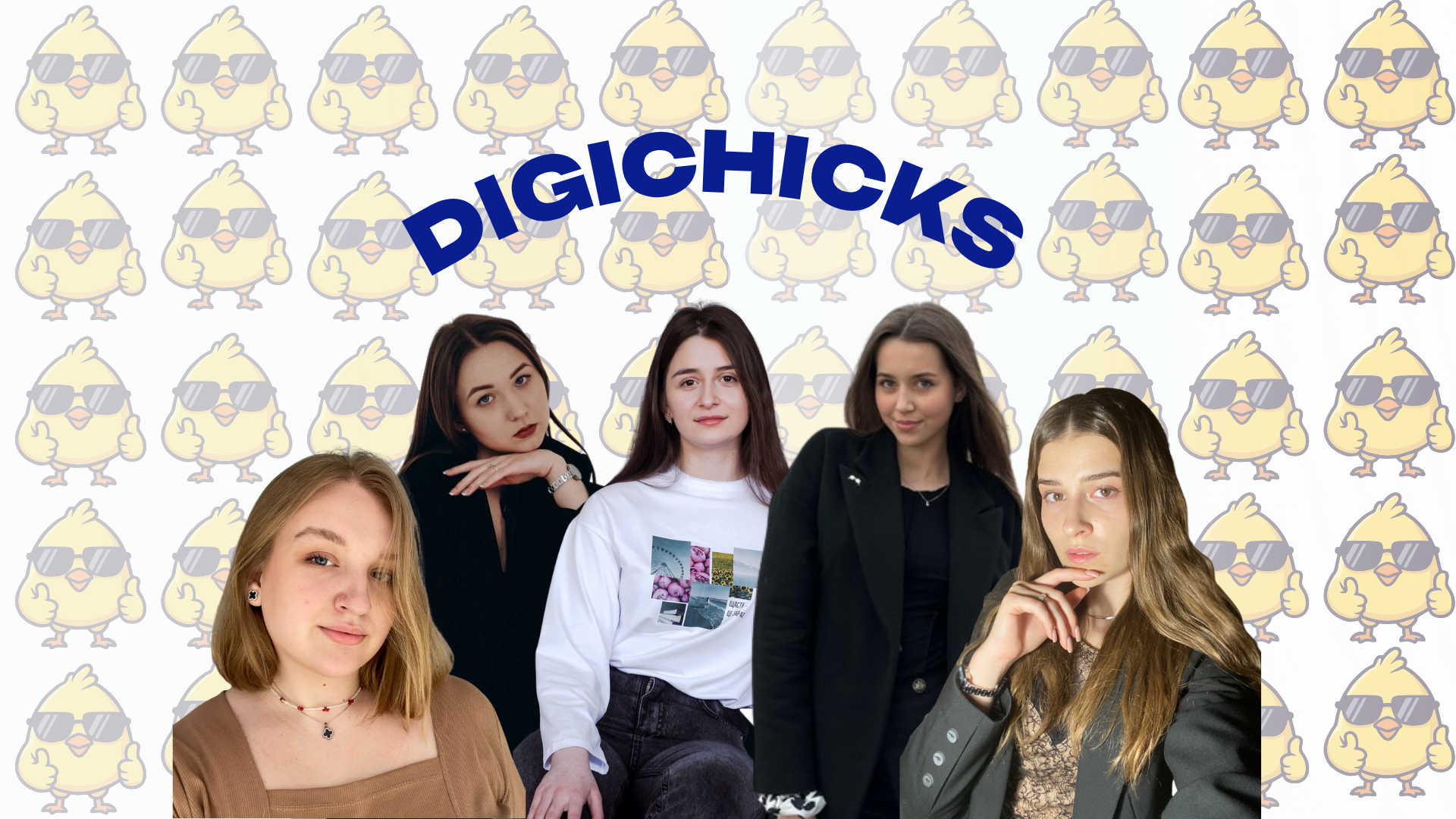
Members of your team: Daryna Rudnitska, Larysa Zabrodska, Liliya Zablotska, Victoriia Khmel, Yuliia Kharchyshyna.
We are the perfect team because we represent the essential triad of successful EdTech innovation: Pedagogy, Technology, and Evaluation. We do not just have an idea; we have the hands-on skills to execute and measure it rigorously.
Our core competencies include:
- Expertise in B2 Language Acquisition: we ensure that the AI tasks are challenging enough for B2 students and target authentic communicative competence, moving past generic exercises.
- The AI Speciality is crucial. Our innovative use of AI rests on the ability to write precise prompts that force creative output (like personalized storytelling) rather than just generating simple text.
- Rigor in Measurement: we provide the discipline to track what truly works, validating the module's success with student data and feedback, rather than relying on assumption.
- Unwavering Passion for Digital Literacy: We are all committed teachers who recognize that teaching students how to use AI responsibly is as important as teaching them grammar. Our project is driven by the belief that AI must be integrated thoughtfully, not avoided.
Our expertise within the thematic field is specifically centered on Task-Based Language Teaching (TBLT) and its intersection with AI. We are experts in designing tasks where students use AI as a tool to complete a meaningful task—not just for drills—which is the most effective approach for developing high-level communication skills.
Yes, we are absolutely planning to continue working together as a core team. This collaboration is non-negotiable for the long-term success of our solution. We view this first module as the successful proof-of-concept for a repeatable model. We need to continue working together for two main reasons: iteration and refinement: Our first step is to systematically gather the data collected by our Assessment Expert and use the feedback to refine our AI prompts and tasks. This cycle of continuous improvement is vital to ensure pedagogical quality.
Innovativeness
The solution is original due to the integration of several specific, accessible AI tools (Leonardo.AI, StoryWizard.ai, Diagram Generator AI) not just for information retrieval, but for personalized creativity and interactive tasks (e.g., visualizing student stories, guessing problems from an AI-generated This approach creates a unique synthesis of language competence and digital literacy in an inherently engaging learning process.
Similar approaches exist where educators use Large Language Models (LLMs) to create reading texts or basic grammar exercises.However, our solution is superior because of its creative focus and holistic integration:
- Creativity and Emotional Connection: The module uses StoryWizard.ai to enable students to visualize their own grammatically correct stories, resulting in significantly deeper and longer-lasting material retention compared to traditional grammar drills.
- Holistic Skill Development: We move beyond simple reading and writing by integrating visual AI content (from Leonardo.AI) directly into listening and speaking tasks (Lesson 3: discussing 'Holiday Problems'), ensuring all skills are developed with digital media.
- Teaches Digital Competence: Students are actively taught prompt engineering and the critical evaluation of AI-generated content, moving them from being passive recipients of AI output to becoming active digital creators.
- Practical Scalability: The module is built using accessible (free) tools, ensuring it is highly scalable and replicable for schools with diverse technological budgets.
Transferability
The solution is highly transferable and can be used fully or partially in various other education contexts, learning levels, and even disciplines.
The pedagogical structure—which combines Task-Based Language Teaching (TBLT) with the creative, specific integration of accessible Generative AI tools to develop all four language skills—is the core repeatable model.
The solution's methodology can be fully transferred to any other thematic unit within the English as a Foreign Language (EFL) curriculum or adapted for other foreign languages (e.g., German, Spanish, or French) at the B2 level.
Example for EFL: The structure used to reinforce Past Tenses via StoryWizard.ai can be applied to a unit on "Science and Technology." Students could be asked to use new vocabulary and the Future Continuous tense to write a brief prediction about a future invention, then use the AI tool to visualize their story and present it.
Example for Other Languages: The Lesson 3 activity, which uses an AI Image Generator to visualize "Holiday Problems" to stimulate speaking, can be directly used in a French class (B2 level) to practice giving advice using the subjonctif mood.
Transferability in Other Disciplines
The principle of using accessible AI tools for visualization and data presentation is readily transferable to non-language disciplines.
Example in History: Students analyzing a source text about a specific era (e.g., the 1920s) could use an AI Image Generator to visualize scenes or concepts described in the text, improving comprehension and presentation skills.
Example in Social Studies/Civics: The method used with the Diagram Generator AI (Lesson 3) can be applied when teaching statistics or surveys. Students could conduct a poll on a local issue and then use the Diagram Generator AI to instantly visualize the results, focusing the lesson on data analysis and interpretation rather than manual chart creation.
Sustainability
The solution's financial sustainability is inherently strong because it is built upon the use of accessible, free, or freemium public AI tools (like StoryWizard.ai, Leonardo.AI, and Diagram Generator AI). This ensures that schools with varying budgets can adopt and implement the module without incurring significant licensing costs, which is crucial for broad-based replication.
For upscaling and replication, our plan involves:
- Creating a Teacher Toolkit: We will develop a detailed, user-friendly "Teacher Toolkit" that includes all lesson plans, necessary links, and a curated repository of effective AI prompts. This simplifies adoption for new educators.
- Dissemination: We will share this toolkit via open educational resources platforms and established teaching communities, prioritizing accessibility.
- Proving Transferability: We will develop at least two more B2 thematic modules ("Culture and History" and "Modern Technology") using the same methodology to demonstrate that the AI Orchestration model is a reliable, repeatable framework, not just a one-off project.
Mid- and Long-Term Vision:
- Mid-Term (1-2 Years)
In the mid-term, the focus is on iteration and adoption. The module will be actively piloted in multiple schools to gather feedback, allowing us to refine the AI prompts and tasks based on real-world classroom performance. Our goal is for the "AI-Enhanced Travel English" module to become a recognized and utilized resource in specific regions, demonstrating a measurable increase in student engagement and B2 skill mastery compared to traditional methods.
- Long-Term (3+ Years)
In the long-term, the vision is to establish a truly sustainable ecosystem. The AI Orchestration methodology will be adapted and extended to other subjects and languages, solidifying its place as a robust pedagogical model in EdTech. We plan to establish an online community of practice where teachers can collaboratively share new AI prompts, integrated lessons, and best practices. This peer-driven expansion will ensure the solution remains agile, relevant, and continuously growing without relying solely on the original development team.